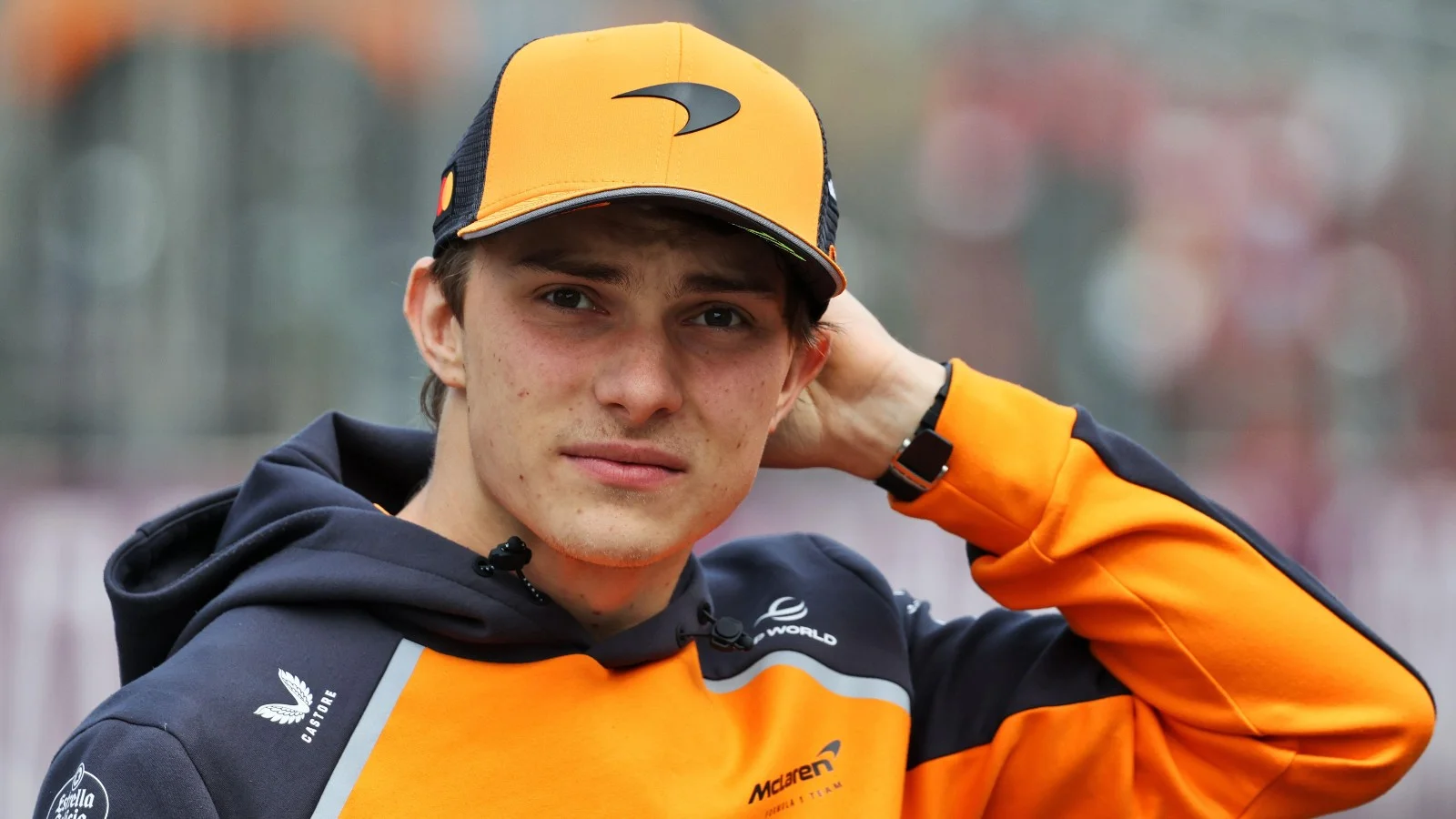
Oscar Piastri Admits Error After Home Grand Prix Crash
The Australian Grand Prix, a highly anticipated spectacle on the Formula 1 calendar, often delivers drama and unexpected twists. For Melbourne-born McLaren driver Oscar Piastri, the 2026 edition provided an unwelcome, pre-race heartache. Expected to start from a promising fifth position at his home circuit, Albert Park, Piastri's hopes were dashed before the lights even went out, following a heavy crash on the reconnaissance lap. What followed was a candid admission of error from the young star, acknowledging his role in the devastating incident – a moment that, in the spirit of the sport's global reach, could be perfectly described as piastri admet faute, or Piastri admits fault.
The incident sent shockwaves through the paddock, especially among the McLaren contingent. While initial reactions from the team hinted at technical complexities, Piastri's subsequent, mature reflection highlighted the intricate dance between driver skill, car dynamics, and environmental factors in elite motorsport. His willingness to confront the mistake head-on offers a powerful lesson in accountability, even amidst the immense pressure of a home race exit.
The Devastating Pre-Race Incident at Albert Park
The atmosphere at Albert Park was electric, charged with the anticipation of a new season and the pride of a local hero on the grid. Oscar Piastri, a promising talent in his second full season, was set to start fifth, a strong position that promised points and excitement for the home crowd. However, the dream unravelled on the pre-race reconnaissance lap, a crucial but typically low-pressure run designed for drivers to check track conditions and warm up tyres before heading to their grid slots.
As Piastri navigated his McLaren MCL40 through the exit of Turn 4, disaster struck. The car, seemingly losing grip, spun violently and slammed heavily into the barrier. The impact was significant, causing severe damage to the right-front corner of his machine. The vision of the shattered car, abandoned trackside, was heartbreaking for fans and, perhaps even more so, for Piastri himself. On the pit wall, McLaren chief executive Zak Brown and team principal Andrea Stella were captured on camera holding their hands to their heads, a silent testament to the immediate disappointment and frustration.
Initial reports from Zak Brown to Sky F1 ahead of the race start offered little immediate explanation. "We've not seen anything on the data so far and he didn't say anything on the radio," Brown stated, indicating the immediate mystery surrounding the crash. The focus quickly shifted to the team's remaining car, driven by Lando Norris, but the sting of Piastri's premature exit was palpable. For any driver, crashing out of a race is tough; to do so at your home Grand Prix, before it even officially begins, adds a layer of profound disappointment and public scrutiny.
Unpacking Piastri's Admission: A Confluence of Factors
In the aftermath of the crash, as the dust settled and initial data was reviewed, Piastri provided a remarkably candid explanation. His willingness to take responsibility, a characteristic often admired in sports, was evident. He admitted that a "large element" of the incident was "just me," a clear acknowledgment that he owned a significant part of the error. This is where the concept of piastri admet faute truly comes into play – Piastri admitting fault, even when other variables were at play.
Piastri elaborated on a combination of factors that contributed to his loss of control:
- Cold Tyres: A perennial challenge for F1 drivers, cold tyres offer significantly less grip than fully warmed ones. On a reconnaissance lap, drivers push to generate heat, but finding the limit can be tricky, especially with a fresh set.
- The Exit Curb: Specific track elements, such as curbs, can be treacherous, particularly when grip is compromised. Hitting a curb incorrectly with cold tyres can easily destabilise a car.
- Unexpected Power Surge: Piastri reported a critical technical anomaly: "I also had 100 kilowatts more power than I expected... with no battery, basically." This suggests a battery management issue or an unexpected deployment of power, providing an unanticipated surge of acceleration at a critical moment. This extra power, combined with reduced grip and a tricky corner, created a perfect storm for loss of control.
"You put that together and it ends in the result we got," Piastri concluded, summing up the unfortunate confluence of circumstances. He stressed that such an incident "shouldn't be happening," reflecting his frustration with both the technical glitch and his own misjudgment. This detailed explanation underscores the immense complexity of Formula 1, where split-second decisions and minute technical variations can have monumental consequences. Piastri's transparency provides valuable insight into the challenges drivers face, and his willingness to acknowledge his part in the equation speaks volumes about his character. For a deeper dive into his direct explanations, read more here: Piastri Explains F1 Crash: Cold Tires, Power Surge, and Driver Error.
A Season of Highs and Lows: Contextualizing Piastri's Performance
This early exit from his home race, though disappointing, needs to be viewed within the broader context of Oscar Piastri's burgeoning, yet sometimes tumultuous, F1 career. His 2025 season, while featuring highlights, also ended on a patchy note. He famously held a 34-point lead after a sensational win at the Dutch Grand Prix in August, showcasing his immense talent and potential.
However, that victory proved to be his last of 2025, as he eventually slipped to third in the standings, behind McLaren teammate and new world champion Lando Norris and Red Bull's Max Verstappen. The latter half of the season saw a series of challenging races:
- Azerbaijan Grand Prix (Baku): Piastri crashed on the opening lap.
- Brazilian Grand Prix: He spun into retirement during a chaotic, rain-affected sprint race.
These incidents meant he scored just three podium finishes across the final nine races of that season, ultimately finishing 13 points behind Norris. This run of form highlights the intense learning curve in Formula 1 and the immense pressure on young drivers to consistently perform at the highest level. The home Grand Prix crash, therefore, adds another chapter to his ongoing journey of mastering both the car and the mental demands of the sport.
Resilience and Rebound: The Path Forward for Piastri
Formula 1 is as much a mental game as it is a physical and technical one. Drivers must possess an extraordinary level of resilience to bounce back from setbacks, especially those as public and devastating as Piastri's home Grand Prix exit. Zak Brown's initial comments, though tinged with disappointment, also carried a note of confidence: "I'm sure he'll be sore about that one for a while, but these racecar drivers know how to recover quickly." He added, "Definitely not the way you want to get started but we'll be back."
Piastri's frank admission of error is, in itself, a significant step on the road to recovery. By taking responsibility and explaining the multifaceted nature of the crash, he not only offers transparency but also creates a foundation for learning and improvement. For aspiring athletes, this demonstrates the vital importance of:
- Self-Assessment: Objectively evaluating one's own performance, even when external factors are involved.
- Communication: Clearly articulating the challenges and lessons learned.
- Mental Toughness: Processing disappointment and refocusing on future goals.
The F1 calendar is relentless, offering little time for dwelling on past mistakes. Piastri will have to rebound quickly, with the Chinese Grand Prix, including a Sprint Race, looming next week. The team's data analysis, combined with Piastri's feedback, will be crucial in understanding and mitigating similar issues moving forward. Historically, Australian drivers have faced a "terrible trend" at their home race, with none ever finishing in the top three. While Piastri's incident was before the race, it unfortunately adds to this challenging narrative. His ability to overcome this personal setback will be a testament to his burgeoning maturity and resilience. For a closer look at the immediate impact and his personal reflection, explore Devastated Piastri Takes Responsibility for Australian GP Exit.
Conclusion
Oscar Piastri's dramatic pre-race exit from his home Grand Prix was undoubtedly a crushing blow, both for him personally and for the McLaren team. However, his swift and sincere admission of error, encapsulating the essence of piastri admet faute, demonstrates a commendable level of maturity and accountability. By openly discussing the complex interplay of cold tyres, track conditions, unexpected power surges, and his own driving input, Piastri has provided invaluable insight into the razor-thin margins that define success and failure in Formula 1.
This incident, while painful, will serve as a crucial learning experience for the young Australian star. The F1 paddock is unforgiving, but it also celebrates resilience. Piastri's journey is still in its early stages, and his ability to analyze, adapt, and return stronger from such setbacks will ultimately define his long-term success. The focus now shifts to the upcoming races, where Piastri will undoubtedly be eager to demonstrate his undoubted talent and prove that this unfortunate home GP mishap was merely a temporary stumble on the path to a promising career.